
How is AI changing software development and will it replace programmers?
 Published
 Artificial intelligence is no longer the future - it’s the present, rewriting the rules of the game in your industry. Analysts at Gartner have no doubt: by 2028, as many as 90% of developers will be using AI assistants on a daily basis. At the beginning of 2024, it was only 14%. This is not just a curiosity for geeks. This is a fundamental change that affects every technology-based business. The first question that probably comes to mind is: what does this mean for me and my company?
On the one hand, you feel excitement - the promise of faster action, smarter products and getting ahead of the competition. On the other, there is uncertainty. Will programmers and entire software houses become redundant? Will headlines about AI writing code mean the end of the need for a technology partner? Is it a strategic necessity or just a temporary hype that will burn through your budget?
This article was written to give you concrete, solid answers. Step by step, I will explain to you how tools such as GitHub Copilot and ChatGPT realistically improve the work of IT teams, but do not replace thinking. After reading it, you will not only understand what software development with AI is all about, but you will be able to make informed decisions that will realistically translate into the growth of your business.
Table of Contents:
- AI tools in practice: What do you need to know?
- How is software developed in the AI era? The new product life cycle
- Will AI replace programmers?
- What is the new role of the software house in the AI era?
- Your roadmap to innovation with AI
AI tools in practice: What do you need to know?
In order to have a strategic discussion, we must first take the magic off these tools. You don’t need to understand their inner workings. Instead, you need to know what role they play in a project and what real value they can bring to your company.
GitHub Copilot: the “Navigator” for your IT team
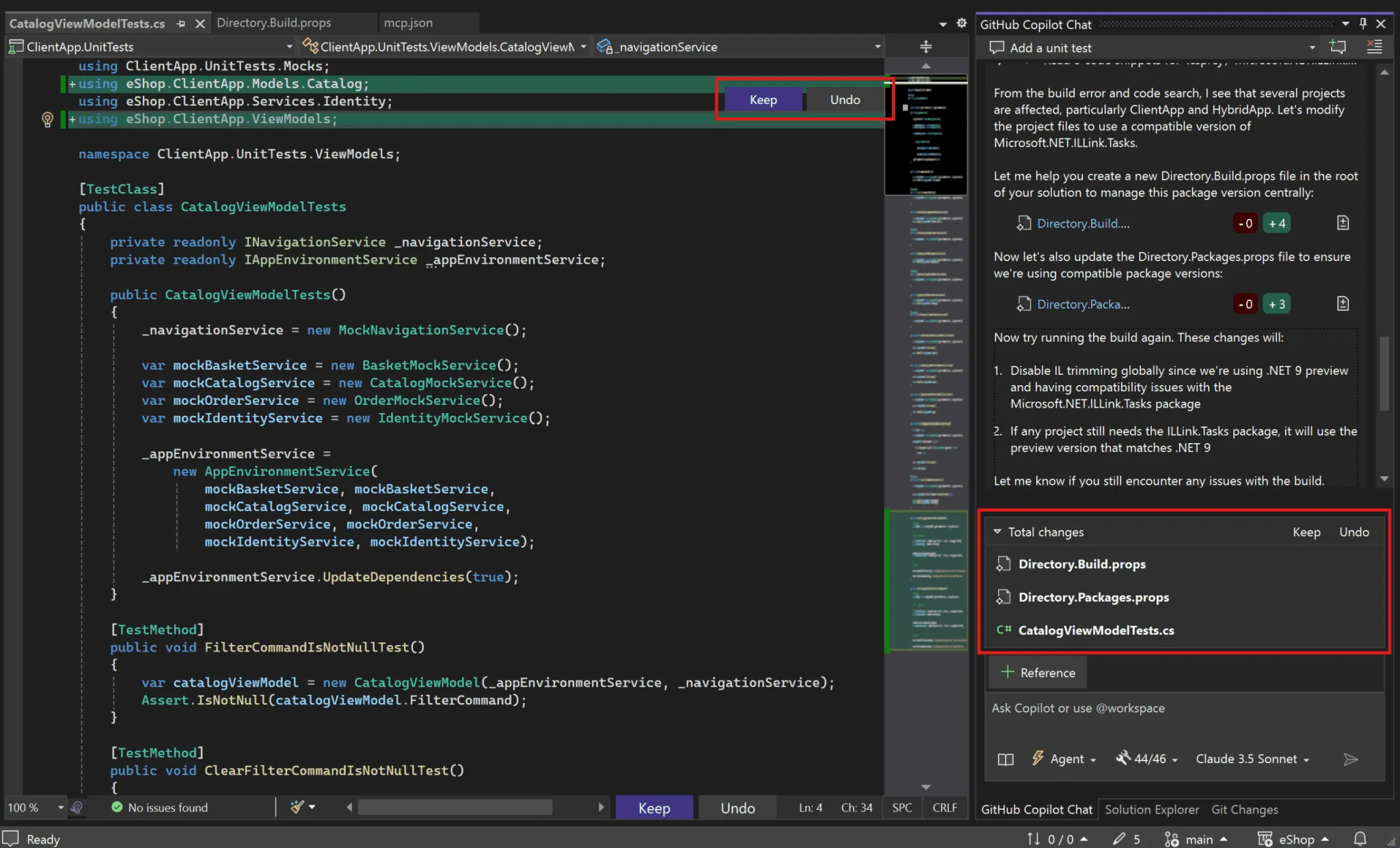
GitHub Copilot is much more than a tool that “writes code by itself.” Think of it as an intelligent assistant, a “co-pilot” that sits next to the programmer and supports him every step of the way. It’s a programming partner that, according to research, increases developer productivity by up to 55%. This is hard business data that shows the real impact of this tool.
How does Copilot help in practice?
- Automation of code writing: Instead of wasting time creating standard, repetitive elements (forms, functions to handle the database), the programmer outsources this to AI. This allows him or her to focus on what matters most - the business logic, which is the heart of your application and provides a competitive advantage.
- Technical expert on call: a programmer can ask in natural language: “How can I optimize this?” or “Explain to me how this piece of code works.” He gets the answer in seconds, without taking his mind off his work, which significantly saves time spent searching for solutions on forums.
- Delegate specific tasks: This is a significant change. A programmer can issue a command: “Fix this bug” or “Write tests for this functionality.” The AI agent independently analyzes the problem, writes the code, tests it, and presents a finished proposal for human approval.
- Automatic quality control: Copilot acts as the first line of defense. It can find potential bugs, security holes or other problems before the code even goes for further review.
ChatGPT: Creative consultant to solve problems
If Copilot is a specialized navigator for coding, ChatGPT is a versatile creative consultant whose applications go far beyond just writing code. It’s a support tool at almost every stage of a project, from concept to implementation.
Where can ChatGPT help with your project?
- Rapid prototyping ideas: Have an idea for a new feature? Instead of weeks of planning, you can describe it in a few sentences and ChatGPT will generate initial interface templates or code snippets. This allows you to quickly visualize the concept and decide “what’s next?”.
- Error detection and repair: When something in an application doesn’t work, finding the cause can be frustrating. Instead of hours of searching, a programmer can paste in the problematic code, and AI will often pinpoint the source of the problem and offer a solution.
- Automate documentation and test creation: Creating technical documentation and writing tests are critical tasks for quality, but often time-consuming. ChatGPT can automate them to a large extent, ensuring better project quality and making it easier to maintain in the future.
- Support for learning and development: Technology is rushing. When a new tool needs to be used in a project, a developer doesn’t have to waste days learning. He can ask ChatGPT for explanations and examples, which speeds up the team’s adaptation to new challenges.
How is software developed in the AI era? The new product life cycle
The introduction of AI is much more than “writing code faster.” It’s a transformation of the entire value creation process - from the first thought about a product to its maintenance. For you, as a manager, it means being able to build better products in a time frame that was unattainable not long ago.
Let’s look at how it looks in practice at each stage.
Phase 1: Strategy and Planning
- Used to: Long workshops, interviews, surveys and manual market analysis. A time-consuming process with the risk of subjective assessments.
- Today with AI: Artificial intelligence analyzes thousands of your customers’ social media reviews, testimonials or support requests in minutes. It pinpoints their biggest “pains,” recurring requests and gaps in your competitors’ offerings. You make decisions about what should be in the first version of your product (MVP) based on hard data, not intuition.
Phase 2: Design and Architecture
- Once: Manual mock-ups and long discussions on the optimal system architecture.
- Today with AI: The designer describes the interface in natural language, and AI generates initial mockups for quick testing. More importantly, AI acts as an architectural advisor. Based on the requirements (“the system must support 100,000 users”), it suggests optimal solutions in terms of performance, security and cost.
Phase 3: Coding
- Used to: Manual writing of code line by line.
- Today with AI: This is where we see a big change. Assistants like Copilot are generating entire chunks of code, freeing developers from tedious tasks and allowing them to focus on solving complex business problems.
Phase 4: Testing and Quality
- It used to be: Testing was the bottleneck. Manual function checking is slow and expensive.
- Today with AI: AI automatically creates test scenarios, providing much better coverage than a human. It can also predict which application modules are most error-prone and should be tested first. The result? Software of much higher quality.
Phase 5: Implementation and Maintenance
- Once: Manual configuration of servers and reviewing hundreds of lines of logs in search of problems.
- Today with AI: Intelligent systems constantly monitor application performance. They can automatically detect anomalies (e.g., an abnormal load spike that heralds a failure) and help with quick diagnosis. This reduces the time of possible system unavailability and provides a better experience for your users.
Will AI replace programmers?
This question is the source of most concern. The short answer is no. The longer answer is that AI will not replace programmers, but programmers who use AI will replace those who do not. The role of the programmer is not disappearing, but fundamentally evolving.
”Copilot, not Autopilot”: Why is the man still at the helm?
Think of it as the autopilot in an airplane. It performs routine operations, but at key moments - takeoff, landing or turbulence - an experienced pilot must take over the controls. The same is true of AI in programming.
AI, despite its impressive capabilities, lacks several key human characteristics:
- Understanding the business context: AI doesn’t understand why you develop software. It doesn’t know your strategic goals, market pressures or the real needs of your customers.
- True innovation: AI perfectly mimics and adapts existing patterns, but will not create something absolutely novel. It lacks the human “spark.”
- Critical thinking: Programming is not writing code, but solving problems. AI is a powerful tool in this process, but it is a human being who must define the problem and assess whether the generated solution makes sense.
- Accountability: Who is responsible for the AI code error that caused the financial loss? Ultimately, always the person and the organization. AI cannot be held legally responsible.
Evolution, not elimination: the Birth of the Programmer 2.0
The role of the programmer is evolving from a “craftsman” writing code to a “solution architect.” Instead of writing every line, the programmer of the future will be responsible for:
- Precise task formulation for AI systems.
- Verification and optimization of AI-generated code.
- Designing how the various intelligent components are to work together.
- Translate your business goals into specific technical tasks.
What is the new role of the software house in the AI era?
As the role of the software developer changes, what about the companies that bring them together? Are software houses under threat? On the contrary. The role of a specialized technology partner is becoming more important than ever, but it is also transforming.
A model based solely on selling “programming hours” is losing its value. The real value in the AI era lies not in simply generating code, but in strategically and securely implementing artificial intelligence into your business processes. With new opportunities come new and complex risks.
A technology partner ceases to be merely a “code factory.” He is becoming a strategic advisor and integrator of AI. His new role is to help you navigate this revolution - guiding you safely through the transformation, minimizing risks and maximizing benefits.
Dialogue with us increasingly rarely starts with the question “Can you build X application?” and increasingly with “How can we use AI to increase sales by 15%?”. To answer this question, we must first deeply understand your business.
Consider: Is your technology partner ready for the AI era?
- Do you talk about my business goals or just technology?
- What experience do you have in integrating systems with AI models (e.g. from OpenAI, Google)?
- How do you ensure the security of company data when using AI tools?
- Can you advise which processes in my company are worth automating first?
- What is your approach to managing the quality of code generated by AI?
Your roadmap to innovation with AI
It’s time to gather the key lessons. Here are 4 points you, as a manager, should remember:
- This is a revolution, not a fad. AI is a fundamental change that permanently alters the rules of the game. Ignoring it is a strategic risk.
- AI is a multiplier, not a replacement. AI tools enhance your professionals, but do not replace their experience, creativity and responsibility. Invest in people and give them the best tools.
- Everyone is evolving. The role of the developer is becoming more strategic. The role of the technology partner is evolving from contractor to strategic advisor for AI transformation.
- Change your perspective. Instead of asking, “Will AI replace us?” start asking, “How can we use AI to build a sustainable competitive advantage?”
Choosing a partner that not only can code, but understands the strategic implications of AI and can safely guide you through this transformation, is one of your most important business decisions today.