
Software house project management methods: Agile, Scrum, Kanban

Many IT companies are faced with the challenge of executing projects that not only meet the high expectations of their customers, but also stay in line with rapidly changing industry trends. Project management plays a role in this process, enabling companies to effectively plan, execute and monitor all stages of a project, from its initial planning to its final implementation.
Key takeaways
- Agile and Scrum rely on short sprints, regular demos of results and close collaboration with the client.
- Kanban visualizes the flow of tasks and helps you spot bottlenecks quickly.
- Waterfall works for projects with a tightly defined scope and few changes.
- Tools support the team: Jira or Trello, Git, Slack or Teams, and Confluence.
- The future means hybrid methodologies, AI support and distributed teams.
Table of contents· 4 sections
Proper project management, supported by project management methodologies such as Agile, Scrum, or classic Waterfall approaches, allows not only for accurate project planning and execution, but also for flexible adaptation to unforeseen changes and challenges, which is invaluable in a changing technological environment.
In the context of a software house, the project manager and his role takes on special importance, becoming the pillar on which the entire project management process is based. It is his skill that determines how effectively tasks will be distributed among team members, how efficiently progress monitoring will be carried out and how effectively the project’s business goals will be achieved. The right choice of project management methodology, an understanding of project stages, the ability to evaluate the project and the adaptation of the management strategy to the specifics of the project are essential for success.
Organizations such as the Project Management Institute (PMI) emphasize the importance of strategic project management, raising its standards and providing valuable resources for project managers around the world, which contributes greatly to improving the productivity of IT projects.
Here is the table of contents included in the article:
- Popular software house project management methods
- Tools to support project management
- The future of project management in IT
- Project management methodologies: Summary
Popular software house project management methods
In the application development industry, the selection of an appropriate project management methodology is essential to ensure the efficiency of project execution, the quality of the final product and customer satisfaction. The variety of available management methodologies allows the process to be tailored to the specifics of the project, its requirements and the dynamics of changes in customer requirements.
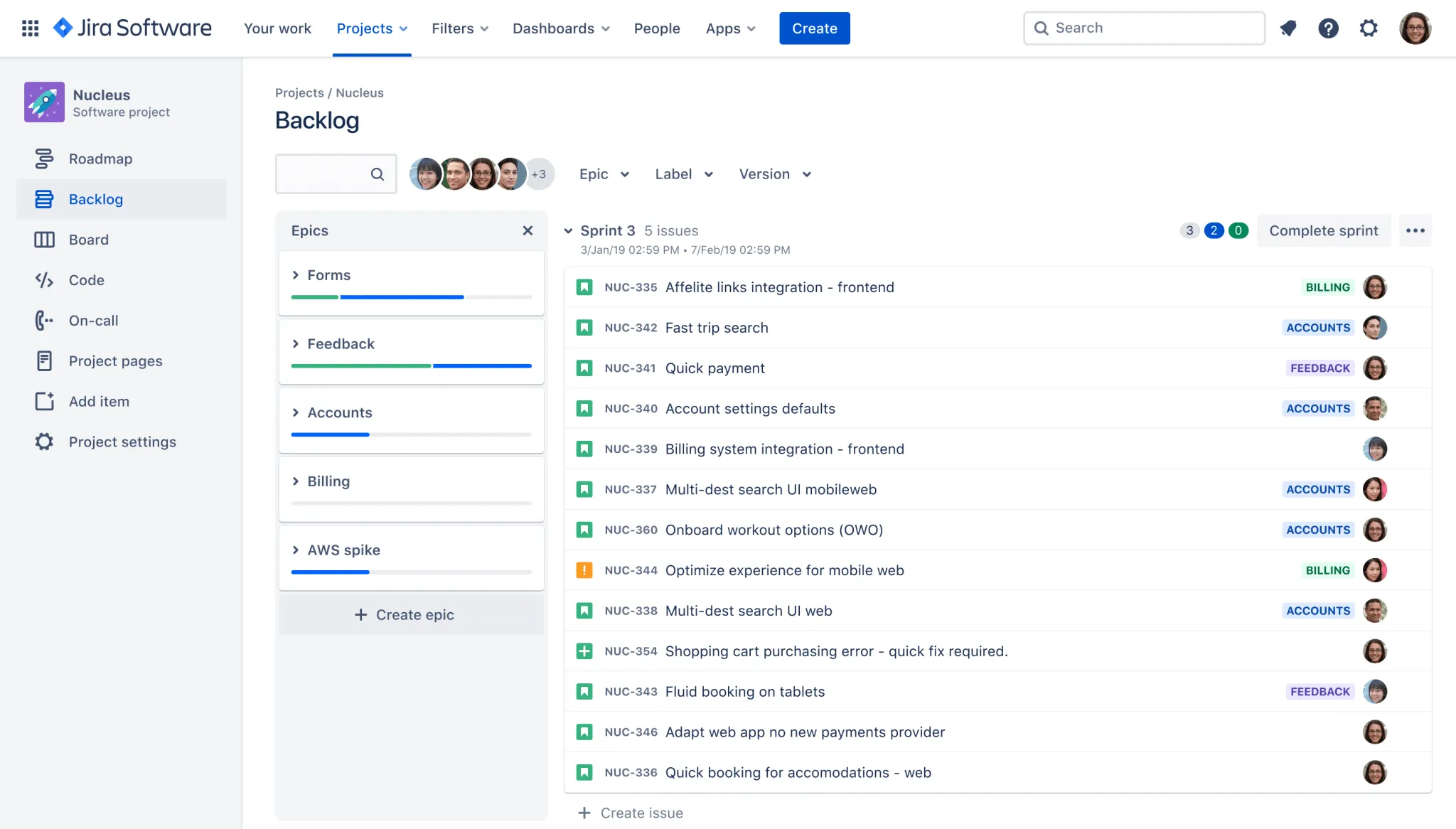
Agile methodologies: Agile and Scrum
Agile and Scrum are approaches that are highly regarded among software development teams, mainly because of their flexibility and focus on ongoing collaboration with the client and adaptation to changing needs. Agile methodologies enable teams to respond quickly to change, which is crucial in a rapidly evolving technology environment. Scrum, which is a practical implementation of the Agile methodology, organizes work into short cycles (sprints), enabling regular presentation of results and effective implementation of changes based on customer feedback.
Kanban
Kanban is another agile approach, focusing on visualizing work and effectively managing the flow of tasks. The technique promotes identification of production bottlenecks and process optimization, resulting in better management of project priorities and resources. Kanban is particularly useful for teams seeking continuity in their work and minimizing downtime.
Classic method (Waterfall)
It is characterized by a sequential approach to project execution, where the various stages are executed one after the other. Despite less flexibility compared to agile methods, Waterfall is still used for projects with a well-defined scope, where making changes during execution is limited. This model allows accurate project planning and evaluation in the early stages, which is beneficial for projects with high complexity and high risk.
The choice of project management methodology is crucial to the success of a software project. The decision should be tailored to the nature of the project, the preferences of the development team and the expectations of the client. Both agile and traditional cascading methodologies have their uses and can be effective in improving productivity, team morale and the quality of the delivered product.
Tools to support project management
Project management requires the use of specialized tools to effectively plan, execute, monitor and close projects. The following are key categories of tools that support this process:
Project management ticketing systems: How do they organize work?
Tools such as Jira, Trello, and Asana offer platforms for comprehensive project management. They make it possible to organize work by dividing projects into tasks, assigning them to team members and tracking progress. With these systems, project managers can easily monitor project milestones, manage resources and schedules, and evaluate project performance in real time.
Code management and versioning tools
Systems such as Git assist development teams in managing source code. They allow version control, which is crucial when working on complex software projects. They facilitate collaboration in teams, allowing simultaneous work on different parts of a project without the risk of overwriting the work of others.
Platforms for communication and collaboration
Tools such as Slack, Microsoft Teams and Zoom are essential for maintaining smooth communication within a team. They provide channels to exchange information directly, hold online meetings and collaborate on documents, which is especially important for distributed teams.
Documentation management tools
Platforms such as Confluence or Google Docs allow you to centrally manage project documentation. They make it easy to create, share and update documents, which is key to keeping things organized and ensuring that all team members have access to necessary information.
Schedule management software
Tools such as Microsoft Project and Smartsheet allow you to create detailed project plans, including tasks, deadlines and dependencies between them. They allow you to accurately plan work stages, manage resources and budgets, which is essential for effectively monitoring project progress and achieving set goals.
Effective project management depends on the precise matching of tools to the specific needs of the project and the requirements of the team. It is important that when choosing tools, one should be guided not only by their functionality, but also by their ease of integration, adaptability to changing requirements and support for effective communication. Properly selected tools provide the foundation for efficient information flow, allowing the team to focus on achieving project goals while remaining flexible and adaptable in a rapidly changing project environment.
The future of project management in IT
Project management in the IT industry is on the threshold of significant transformations, driven by advances in technology, changes in work methods and evolving business expectations. These future trends will affect all aspects of project management, from the role of the project manager to project evaluation methods.
Increased role of technology in project management
Technology will increasingly integrate into daily project management operations, offering new opportunities and challenges:
-
Automation and AI: Artificial intelligence and automation tools will transform the way we manage projects, from automatically monitoring project progress to optimizing resource allocation. This will allow project managers to focus on more strategic aspects of management, such as developing innovation and shaping organizational culture.
-
Decision support tools: Advanced analytical tools and data-driven decision support systems will allow better forecasting of project performance, identifying risks at an early stage and making decisions based on solid data. This will allow for more flexible and dynamic project management, minimizing risk and maximizing efficiency.
Evolution of management methodologies
Project management methodologies will evolve to better meet changing business and technology needs:
-
Agile and hybrid methodologies: Agile methodologies will continue to evolve in response to the need to adapt more quickly to changing market conditions. Hybrid approaches, combining the advantages of both agile and traditional methodologies, will become the norm, allowing organizations greater flexibility in project execution.
-
Focus on business value: As companies become more focused on delivering value quickly, project management will increasingly focus on maximizing business value. This means a deeper understanding of business objectives by project managers and better alignment of projects with the company’s strategic priorities.
Adaptation to a changing work environment
- Remote work and distributed teams: tools and methodologies must evolve to support effective collaboration in distributed teams. This means not only adapting project management processes, but also developing soft skills among project managers, such as communication, empathy and building commitment.
Applications
The future of project management in IT heralds a period of adaptation and innovation in which technology, agile methodologies and strategic management approaches will be important elements of success. The balance between project performance nurturing and effective management will be greatly facilitated by AI automation. Integration of projects with core business objectives, effective use of new technologies and adaptation to global work trends will determine future efficiency and success in IT project execution.
Project management methodologies: Summary
Project management in the IT industry requires project managers not only to be proficient in various methodologies, such as the Scrum methodology or the cascade model, but also to have strategic management skills that allow them to effectively achieve the set project goals. It is important for project management processes to be flexible and tailored to the specifics of a given project, enabling it to effectively overcome rigid constraints and maximize project performance. In this context, project evaluation, strategic planning and project phasing are important for project success.
The future of project management in IT will evolve toward greater use of technologies such as artificial intelligence and automation tools that will revolutionize the way projects are planned, executed and evaluated. Adapting to the changing work environment, including managing distributed teams and working remotely, will require new skills and approaches from project managers. To meet the challenges ahead, project managers will need to focus not only on the technical aspects of project management, but also on the relationship-building, fostering innovation and strategic thinking that are required to successfully lead projects in a rapidly changing IT world.

Cloud Computing: How is cloud computing changing application development?
Cloud computing, often referred to as "the cloud," allows access to resources, such as computing power, disk space, and databases, over the Internet.